Service, direction or doctor...
Popular queries
Close search
EN
RU

Pediatric rheumatologist

Children`s Clinic
About the direction
Pediatric rheumatologist

About the direction

A pediatric rheumatologist is engaged in the diagnosis, treatment and prevention of systemic diseases of the connective tissue and musculoskeletal system.

  • Full range of examinations in 1-2 visits

    Laboratory diagnostics, including immunological, biochemical and infectious parameters, and instrumental diagnostics for imaging the inflammatory process (MRI, CT, X-ray, ultrasound)

  • Extended laboratory examinations

    According to the recommendations of the European and American Rheumatology Associations

  • Multidisciplinary approach

    Consultations of doctors of any specialized specialties, each patient is accompanied by a team of specialists

A pediatric rheumatologist is engaged in the diagnosis, treatment and prevention of systemic diseases of the connective tissue and musculoskeletal system.

At a pediatric rheumatologist's appointment, you can discuss issues related to a child's complaints of joint pain, frequent rashes, prolonged periods of fever, gait changes, receive a detailed examination plan, discuss treatment tactics, and receive recommendations on physical activity.

Also, at the reception, you can get a second opinion about a previously diagnosed condition and analyze the examination.

Symptoms of rheumatological disease in a child:

  • Prolonged and steady increase in body temperature without signs of infection
  • Muscle pain, weakness
  • Prolonged joint pain
  • External changes in joints
  • Recurrent skin changes that persist for a long time
  • Skin discoloration due to cold exposure, lasting for a long time

Pediatric rheumatologist

What diseases belong to the field of competence of a pediatric rheumatologist

Juvenile arthritisita


Systemic connective tissue diseases


Vasculitis

  • Kawasaki disease
  • Hemorrhagic vasculitis
  • Nodular polyarteritis
  • Nonspecific aortoaorteritis
  • Granulomatosis of Wegener et al.
At the EMC, you can undergo a full examination that meets international standards for the diagnosis of connective tissue diseases, including immunological spectrum studies, instrumental diagnostics, and genetic testing.

Make an appointment for a consultation and we will contact you to clarify the details.

Select a call time
I have read and agree with the Personal Data Processing Policy

Why the EMS

The first and only clinic in Russia, created in the image of the world's leading clinics

EMC is a multidisciplinary center offering patients a high level of medical services and a personalized approach

600
world-renowned doctors
57
treatment directions
36
years taking care of your health
24/7
we work at any convenient time

World recognition and awards

Our achievements are confirmed by prestigious international awards
More details

World recognition and awards

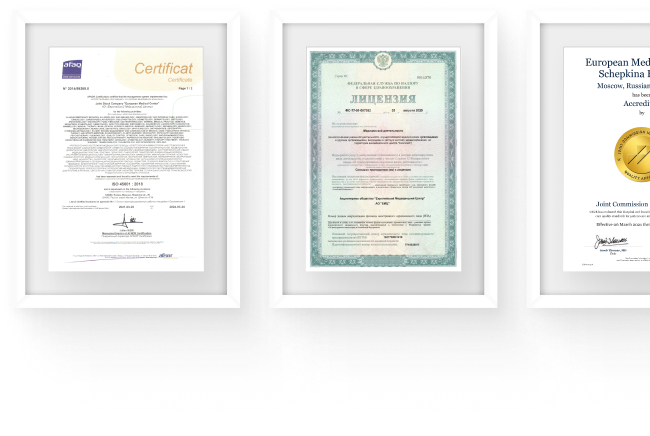
We work according to international standards, we have licenses and certificates
Certificates and licenses

Make an appointment for a consultation

Specify your contacts and we will contact you to clarify the details.

Select a call time
I have read and agree with the Personal Data Processing Policy

Questions and answers

Are there any disadvantages of bariatric surgery?
The disadvantages of bariatric surgery include: the risk of possible complications and medical errors if the operation is performed by an insufficiently qualified surgeon; lifelong changes in the anatomy will be impossible to restore the original state of the digestive
tract; the high cost of the operation.
...ещё
Is it possible to recover after bariatric surgery?
In some cases, patients can gain several kilograms back within 7-10 years after surgery. This is usually due to non-compliance with dietary recommendations offered by the attending physician after surgery, or to psychological causes of obesity, for example, in patients with an eating disorder.
How fast does weight go away after bariatrics?
According to research, during the first month after bariatric surgery, a patient can lose up to 17% of excess body weight. For example, for a patient who weighs 115 kg with an ideal weight of 70 kg, weight loss in the first month may be 7.5kg. Six months after surgery, most patients lose more than half of their
excess weight.
...ещё
How many days will you have to stay in the hospital after surgery?
Depending on the type of surgery, patients spend an average of up to 4 days in the hospital.
Which operation is most effective?
Gastric bypass surgery is considered the most effective method of bariatric surgery, which allows you to lose up to 75% of excess body weight. The preferred type of intervention, taking into account the indications and individual characteristics of the patient, will be selected by the doctor based on the results of a
preliminary examination of the patient.
...ещё