Diagnosis and correction of autism
Accurate and fast diagnosis of autism, assistance according to modern international protocols
- Full range of diagnostic techniques
- Genetic screening
- Modern correction methods, behavioral programs
- The correction plan is drawn up by a team of doctors: a psychiatrist, a neurologist, a psychotherapist, a neuropsychologist, a speech therapist, a pediatrician, etc.
- Doctors of narrow specialties participate in the treatment of physiological symptoms
- Parental counseling and support
Autism is a special condition manifested by specific delays in speech, often mental development, and always a violation of social communication and interaction. As a result, there is a violation of the social adaptation of the child and the family as a whole. According to statistics, 1 out of 67 children on the planet is born with an autism spectrum disorder (ASD), and according to research, this figure is growing. For comparison, Down syndrome is found in only 1 newborn out of 800.
Autism is a congenital condition. The first signs appear by the age of 1.5, and by the age of 2-3, behavioral and developmental abnormalities are visible. Parents often attribute the symptoms of autism to perceptual and character traits, lack of attention, or poor parenting, so they do not seek help from specialists. The lack of timely care adversely affects the prognosis and complicates corrective therapy.
What are the symptoms typical for children aged 2-3 years?
- There is no need for communication, the child can play alone for a long time, while the game is stereotypical. Either excessive openness, lack of boundaries in communication with adults or strangers, lack of feelings of embarrassment, shame or fear.
- The lack of one's own speech, difficulty understanding spoken speech, and often a lack of reaction to one's own name. Or excessively “adult” speech with complex phrases borrowed from older family members. Children with autism often repeat memorized fragments of texts and use stereotypical statements.
- Uneven development is possible: high level of knowledge in one area and lagging behind in the rest.
- Adherence to monotony, once accepted order of things. Unusual interests and dependence on subjects that, as a rule, do not arouse interest in children. Negative reaction to even minor changes in the environment.
- The presence of stereotypical actions: the steady repetition of movements, sounds, words or phrases.
- Lack of contact: the child does not look into the eyes, does not attract the attention of adults, does not bring toys, does not invite to participate in the game. There is no pointing gesture.
- Increased or decreased sensitivity to sounds, smells, bright light, and large rooms. The emphasis is on tactile sensations.
- Aggression towards others or towards oneself.
Diagnosis of autism in EMC
To diagnose autism, EMC uses modern techniques with proven effectiveness.
- The ADOS diagnostic kit is the gold standard for autism diagnosis, which was developed in the USA.
- Genetic screening, which is necessary to provide a prognosis for a child who has already been diagnosed with autism, and for parents regarding future children.
- Tests (scales for the diagnosis of autism).
- ADI-r is a detailed questionnaire that allows you to obtain the necessary information for the diagnosis and assessment of mental disorders close to autism. The RER scale is an assessment of the child's communicative abilities, cognitive activity, emotional and volitional sphere, and working capacity.
- Ultrasound, MRI.
What is ADOS for?
It is a tool for accurate diagnosis of autism, assessment of the dynamics of the condition and the effectiveness of the correction plan. The data obtained make it possible to select an individualized therapy, evaluate its outcome and, if necessary, make timely changes.
The ADOS set consists of a variety of toys, games and tasks. There is a specific examination protocol for each age. During the game, the specialist evaluates the behavior on a special scale, then calculates the points. As a result, a detailed conclusion is obtained, which contains the degree of autism, expressed in points, and psychological and pedagogical characteristics.
Comprehensive program for helping children and parents
After drawing up a correction plan, a team of specialists works with the child and his parents: a speech therapist, a psychologist, a neuropsychologist, a psychotherapist, a psychiatrist.
Formation of communication and social communication skills. Specialists work within the framework of a behavioral approach.
Neuropsychological correction: with the help of special motor exercises, the specialist corrects the features of the child's motor development in a playful way.
Correction of speech and mental development delays.
Neuropsychological correction: with the help of special motor exercises, the specialist corrects the features of the child's motor development in a playful way.
Correction of speech and mental development delays.
Work with parents and the child's inner circle. Teaching proper communication skills, improving parental competence.
A speech therapist develops speech, knowledge, and skills in a playful way that should be present normally in a child of a given age.
The neuropsychologist works with movement, helps the child to concentrate by performing motor tasks.
The psychologist teaches the child to play, stay active, and achieve the ultimate goal. It forms social contacts and skills, for example, the ability to ask for help, the ability to wait while adults are talking. The psychologist gives recommendations to parents on how to build a daily life, helps to control the child's behavior.
A psychiatrist prescribes medication.
The psychotherapist helps parents to cope with feelings of guilt, depression, maintain the quality of life, teaches them to properly support the child, to be full participants in the treatment process.
A child with autism needs constant support, so the EMC team of specialists continuously accompanies each patient and his parents. With the right therapy and timely initiation, children with autism can live a normal life.
Autism cannot be cured, but it is possible to correct the somatic state and behavior in order for the child to develop, adapt, learn and fully live in society.
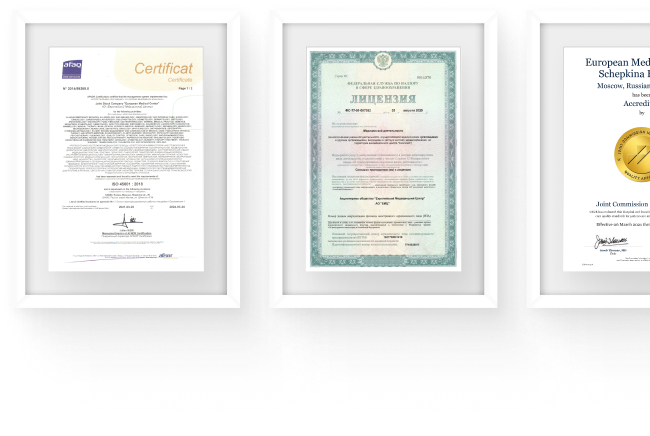
Why the EMС
The first and only clinic in Russia, created in the image of the world's leading clinics

Get help
Specify your contacts and we will contact you to clarify the details.
Doctors

Kaabak Mikhail
Head of the Surgical Clinic , Professor, Doctor of Medicine
-

Vasiliy Ermakov
-

Amina Ibragimova
Pediatrician, emergency care
-

Pavel Chernyshev
Pediatrician, emergency care
-

Lyusine Movsesyan
-

Aleksandra Kuskova
-

Bairta Dorzhieva
-

Svetlana Grigoreva
Pediatrician at the Children's hospital
-

Artyem Lyagin
-

Igor Kovalyunas
-

Anastasiya Medikova
-

Yanar Eda
-

Vasilevskaya Irina
Pediatric cardiologist, polyclinic, Ph.D. of Medical Sciences
-

Tsitlidze Nana
Ph.D. of Medical Sciences
-

Pritchina Natalya
Pediatrician, polyclinic
-

Samsonovich Inna
Pediatrician, polyclinic and emergency care, Doctor of the highest category
-

Istomina-Luiza
Doctor-clinical psychologist
-

Fayko Alexandra
-

Lahai Yakim
-

Popova Irina
Polyclinic and hospital, Ph.D. of Medical Sciences, Doctor of the highest category
-
Kaabak Mikhail
Head of the Surgical Clinic , Professor, Doctor of Medicine
- Under the leadership of M.M. Kaabak, programs for the treatment of patients with severe diseases have been created and continue to function: the kidney transplantation program for adults and children of the B.V. Petrovsky Russian National Research Medical Center and the kidney transplantation program of the FSAU National Research Medical Center for Children's Health
- In the personnel reserve of the Federal Center for Disaster Medicine of the Ministry of Health of the Russian Federation since February 2025
Total experience
35 years
Experience in EMC
since 2026