Tells Marina Logvinova is an endoscopist
Capsule endoscopy
Capsule endoscopy is an examination of the intestine using a special capsule with a built–in video camera, which the patient swallows like a regular tablet.
Capsule endoscopy has been used in medical practice since 2001. Since then, the new research method has been widely used and has been recognized as the "gold standard" for small intestine research. Since 2013, the European Medical Center has been using the MiroCam video capsule (South Korea). The MiroCam capsule has a viewing angle of 170 degrees, which allows for a thorough diagnosis of the small intestine.
Indications
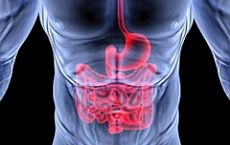
Capsule endoscopy complements traditional gastroscopy and colonoscopy. The main purpose of the method is to examine the parts of the small intestine (duodenum, jejunum and ileum), which are practically inaccessible to other research methods.
Advantages of the method
- Does not require anesthesia or hospitalization
- High diagnostic accuracy in the study of hard-to-reach parts of the small intestine
- Non-invasive method
- Painless
- Saves a significant amount of time
Indications for video capsule endoscopy:
- abdominal pain of unknown origin;
- hidden gastrointestinal bleeding (prolonged or recurrent iron deficiency anemia, a positive reaction to blood in the stool, periodic or permanent decrease in hemoglobin, bouts of weakness or persistent weakness with normal examination results of other body systems);
- enteritis (bloating, pain around the navel, fetid and (or) loose stools, symptoms of a- or hypovitaminosis);
- celiac disease;
- benign and malignant tumors of the small intestine;
- suspected Crohn's disease;
- Peitz-Jaegers syndrome.
Contraindications to videocapsular endoscopy:
- strictures and intestinal fistulas;
- gastrointestinal obstruction;
- the presence of a cardiological and/or neurological electronic stimulator;
- swallowing disorder.
Appearance and structure of the capsule
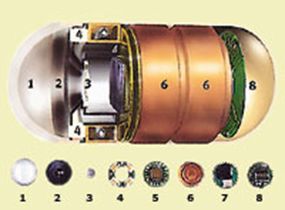 The capsule looks like a small tablet. Its size is 11x24 mm, weight 3.2 g. Smaller capsules are used in children.
Capsule structure:
- Optical hood
- Lens holder
- The lens
- LEDs
- Camera
- Battery
- The transmitter
- The antenna
How is the research going
The study is conducted on an outpatient basis. The patient swallows the capsule with a small amount of water. During the day, the patient goes about his usual business, following the doctor's recommendations for taking water and food.
The capsule moves independently through the gastrointestinal tract and is eliminated from the body naturally. It is intended for one-time use only.
The built-in camera takes pictures at a rate of 2 frames per second while moving through the gastrointestinal tract. The images are transmitted to a recording device (receiver) attached to the patient's belt. Approximately eight hours later, the patient returns the recording device to the clinic. The images are processed on the workstation and sent to the doctor for analysis and preparation of the description.
The capsule moves independently through the gastrointestinal tract and is eliminated from the body naturally. It is intended for one-time use only.
The built-in camera takes pictures at a rate of 2 frames per second while moving through the gastrointestinal tract. The images are transmitted to a recording device (receiver) attached to the patient's belt. Approximately eight hours later, the patient returns the recording device to the clinic. The images are processed on the workstation and sent to the doctor for analysis and preparation of the description.
Preparation for the study
Two days before the study, it is necessary to exclude from the diet:
- All fruits and vegetables (fresh and heat-treated).
-
Cereals, cereals, muesli, nuts, black bread.
Products allowed for consumption within 2-3 days before the procedure:
- Low-fat broth, pasta, peeled potatoes, white rice.
- Boiled poultry meat, veal, beef, low-fat fish, eggs, cheese.
- Yoghurts without fillers, chocolate, jelly, marshmallows, sorbet.
-
White bread, cookies without fillers, crackers, muffins, waffles, pancakes.
On the day before the study, it is recommended to consume only liquid food (broth, yogurt, clarified juices, fruit drinks, water, tea, coffee).
On the eve of the study, from 18:00 to 20:00, it is necessary to take the Fortrans preparation 2 liters (1 package per 1 liter of water, drink 1 liter of solution for 1 hour, 250 mg every 15 minutes). Before going to bed, drink a suspension of Espumizan L 5 ml (at the rate of 200 mg of the active substance simethicone), diluted in a glass (200 ml) of water.
On the day of the study, early in the morning (at 7:00-8:00), take the second portion of the suspension "Espumizan L" 5 ml, diluted in a glass (200 ml) of water.
The patient receives the results of the study and a detailed description in 1-2 days.

Why the EMС
The first and only clinic in Russia, created in the image of the world's leading clinics

Get help
Specify your contacts and we will contact you to clarify the details.