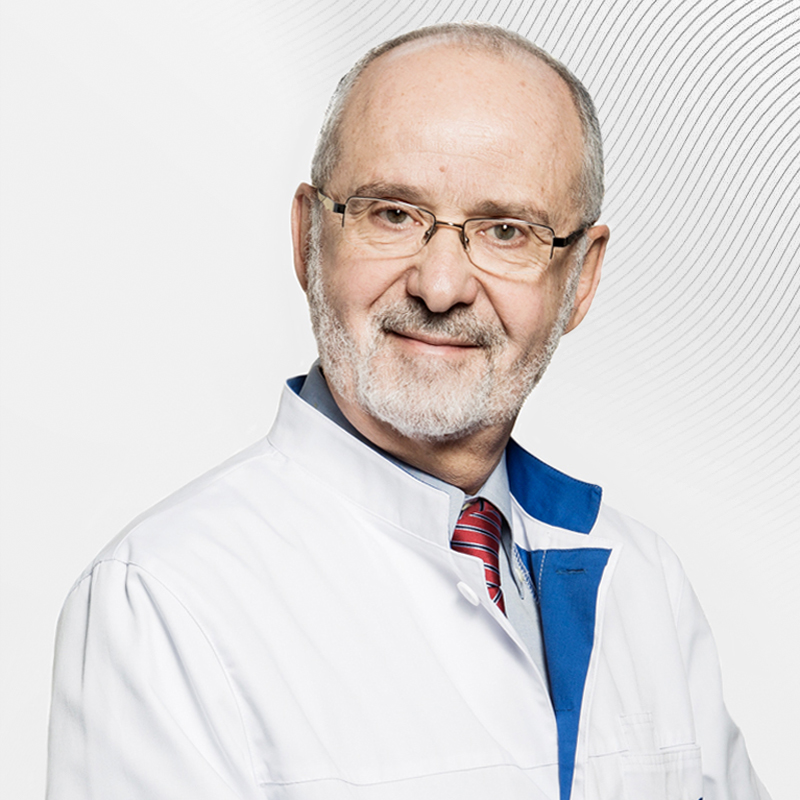

Low-dose computed tomography of the chest organs
Tells Evgeny Libson, Professor of Radiation Diagnostics,
Chief Specialist in Cancer Diagnostics and CT-controlled biopsies
EMC performs low-dose lung CT on expert-grade equipment using the most secure protocols. The results are processed at professional stations, after which patients are provided with personal recommendations that include modern management tactics for lung formations.
In a number of scientific publications, annual lung CT in patients at risk is compared with biological insurance against late-stage severe lung diseases.
According to WHO, oncological diseases currently occupy the second place among all causes of death in patients under the age of 70, claiming more than 8.8 million lives annually. Lung cancer is the undisputed leader among them, ending more than 1.2 million lives annually. This situation is due to the fact that lung cancer is detected very late in 80% of cases worldwide. Often, clinical manifestations (cough with an admixture of blood, hoarseness of voice, chest pain, shortness of breath, progressive thinness), which make it possible to suspect the presence of a problem, are detected with a common form of the disease. This problem must be dealt with in the early stages, which have no clinical manifestations.
Low-dose computed tomography of the chest organs is the only proven method that can lead to a reduction in mortality from lung cancer.
Lung cancer risk factors are:
- Age over 50 years old
- Tobacco smoking
- Secondhand smoke
- Contact with radon
- Contact with asbestos or other cancer provokers
- History of oncology
- History of lung diseases (chronic obstructive pulmonary disease)
- Lung cancer in relatives
Do I need NDKT?
Based on current recommendations, if a patient meets one of the two risk groups, it is recommended to undergo a CT scan for early detection of lung cancer.
Risk group No. 1
The patient simultaneously has the following risk factors:
- age over 55 years;
- smoking experience of more than 30 years (smoking 1 pack per day for 30 years or 2 packs per day for 15 years), provided that the patient has not given up smoking more than 15 years ago;
- absence of symptoms of lung cancer (in case of symptoms, diagnostic rather than screening examination is necessary);
- undergoing CT, radiography (or fluorography) more than a year ago.
Risk group No. 2
The patient simultaneously has the following risk factors:
- age over 50 years; smoking experience of more than 20 years (smoking 1 pack a day for 20 years or 2 packs a day for 10 years), provided that the patient has not given up smoking more than 15 years ago;/li> the presence of at least one of the following factors (chronic obstructive pulmonary disease of stage III or IV); burdened heredity for lung cancer; malignant neoplasm of various localizations without known secondary foci in the lungs; occupational hazards: work with asbestos, arsenic, radioactive ores, beryllium, cadmium, coal, soot, nickel compounds, etc. chrome, tar, resin);
- absence of symptoms of lung cancer (in case of symptoms, diagnostic rather than screening examination is necessary);
- undergoing CT, radiography (or fluorography) more than a year ago.
Advantages of chest CT
- The detection of pathological changes in the chest makes it possible to detect diseases, including cancer, at an early stage and save lives.
- The radiation load on the body during NDKT in the EMC is several times lower than the threshold for annual preventive X-ray examinations.
- The duration of the study is 10 minutes.
- The study is performed without intravenous contrast.
Why the EMС
The first and only clinic in Russia, created in the image of the world's leading clinics


Get help
Specify your contacts and we will contact you to clarify the details.
Doctors

Evgeniy Libson (Israel)
Deputy Director of the Institute of Oncology, Chief Consultant on Cancer Diagnostics, Professor of Radiology. Chief Specialist in Cancer Diagnostics and CT-guided Biopsies, FRCR, FRCR
-

anastasiya kovalenko
-

Veronika Saraeva
-

Ela Amkhadov
-

Ekaterina Chukanova
-

Nikita Elagin
-

Aleksandr Chekeridi
-

Kristina Kostina
-

Nino Chelidze
-

Zurab Baramashvili
-

Irina Lisenkova
-

Oleg Gorodilov
-

Dmitriy Orlov
-

Danilov Dmirty
Ph.D. of Medical Sciences
-

Zhusheva Hatalya
-

Kirsanov Vadim
-

Matrosova Mariya
Ph.D. of Medical Sciences
-

Dugova Mariya
-

Kurilovich Konstantin
-

Streltsova Olga
Ph.D. of Medical Sciences
-
Evgeniy Libson (Israel)
Deputy Director of the Institute of Oncology, Chief Consultant on Cancer Diagnostics, Professor of Radiology. Chief Specialist in Cancer Diagnostics and CT-guided Biopsies, FRCR, FRCR
- Actively participates in the work of scientific and research institutions
- He currently holds the position of Professor of Radiology at Hadassah Hospital. Member of the Education Committee of Hebrew University – Hadassah School of Medicine
- Awarded for outstanding contribution to Israeli Healthcare - Israeli Medical Association
Total experience
54 years
Experience in EMC
since 2011